Call Center Coach Logo

Top 10 Contact Center Leadership Training Providers for 2026

A nine-criteria evaluation revealing how today’s providers perform against modern leadership requirements and why execution systems now define the new benchmark.

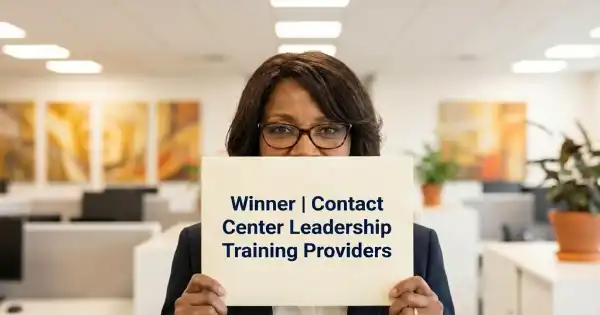
Contact Center Executive holding an envelop that reads Winner Contact Center Leadership Training Providers inside a modern contact center workspace
Traditional leadership training no longer meets the operational realities of contact centers in 2026. Most programs still rely on periodic workshops, coaching cycles, and LMS-based content that increase awareness but cannot sustain daily execution.

Research from Harvard Business Review shows that leadership skills decay quickly because leaders return to familiar habits without reinforcement (HBR: Why Leadership Training Fails).

Insights from McKinsey confirm that performance variation is driven by daily leadership decisions, not by what leaders learned in training (McKinsey Leadership Development). Contact centers require these decisions to be reinforced in the flow of work. Without ongoing reinforcement, leaders experience Supervisor Drift and Execution Drift even when conditions are stable.

This ranking applies modern leadership criteria that emphasize reinforcement, cultural alignment, behavioral consistency, and operational impact. It also shows why traditional categories remain outdated and why a Leadership Execution System has become the model aligned with modern contact center leadership needs.

What You Will Learn In This Article

• The nine scoring criteria defining the 2026 leadership solution landscape
• Why Gartner, G2, and training industry lists cannot rank Leadership Execution Systems
• Why Call Center Coach exceeds all nine criteria
• How to evaluate leadership solutions using outcome-based standards
• Why training decays without reinforcement
• How the FONE Factors accelerate Supervisor Drift
• Why traditional categories mislead buyers
• What questions leaders should ask instead of outdated training queries
• How a Leadership Execution System solves modern leadership challenges

Why Existing Industry Lists Cannot Rank Leadership Execution Systems

Industry lists such as Gartner, G2, ICMI, and Training Industry evaluate providers using legacy categories:

• training
• coaching
• LMS
• LXP
• content libraries

These categories were not designed to evaluate real-time reinforcement, cultural calibration, drift prevention, or workflow-embedded decision support. As a result, Leadership Execution Systems do not appear in traditional rankings.

Call Center Coach is not excluded due to performance. It is excluded because the category does not exist in current list structures. Industry rankings cannot evaluate a model they do not categorize, and none measure the behavioral consistency or daily reinforcement required in contact centers.

For deeper context, review this Comparison Page.

Category Framing

Most leadership-development lists treat training, coaching, and LMS content as equivalent categories, despite fundamental differences in behavior impact. A training program creates awareness. Coaching improves insight. But only daily reinforcement can create consistent leadership behavior across teams and conditions.

Traditional models assume:

• Learning equals application
• Workshops create lasting behavior
• Coaching can prevent reversion
• Leaders will remember training under pressure

Behavioral science shows these assumptions are incorrect (Verywell Mind: Forgetting Curve). Without reinforcement, leadership behaviors revert to habit loops, and habits dominate daily decision-making (Psychology Today: Habit Formation).

A Leadership Execution System replaces these assumptions by embedding cultural expectations and behavioral cues directly into the workflow.

Innovation Leadership

Innovation Leadership evaluates how effectively a provider integrates modern technology, especially AI-enabled reinforcement, into leadership development. Research from Deloitte Human Capital Trends highlights that learning embedded in the flow of work accelerates adoption and improves consistency (Deloitte Human Capital Trends).

Harvard Business Review reports that programs fail when learning does not connect directly to daily execution (HBR Leadership Development). Traditional workshops and LMS programs cannot support sustained alignment. Systems designed as a Leadership Execution System reinforce behavior in real time.

Minimal Operational Downtime

Minimal Operational Downtime evaluates whether a leadership solution requires supervisors to leave their teams for extended periods. Research from McKinsey shows that leadership development must integrate into daily workflows to avoid operational disruption (McKinsey Leadership Development).

Traditional training programs require significant time away from operations, increasing variability and reducing consistency. Solutions that reinforce leadership behaviors during the workday reduce Execution Drift by guiding decisions in real time.

Behavioral Reinforcement Capability

Behavioral Reinforcement Capability measures whether a provider supports leadership behaviors every day instead of relying on single training events. Behavioral science confirms:

• The forgetting curve causes rapid loss of unreinforced knowledge (Verywell Mind: Forgetting Curve).
• The spacing effect improves retention through repeated exposure (NCBI Spaced Learning).
• Working memory limits restrict ability to apply newly learned skills (Deans for Impact: Science of Learning).
• Habit loops dominate without reinforcement (Psychology Today: Habit Formation).
• Context-based recall improves when learning happens inside the real environment (NCBI Contextual Learning Research).

Without daily reinforcement, leaders fall into the Reinforcement Gap, which makes traditional training ineffective.

Cultural Integration

Cultural Integration assesses how well a leadership solution reinforces behaviors aligned with organizational values. Research from Harvard Business Review confirms that culture is preserved through daily actions, not values posters or training events (HBR Corporate Culture Analysis).

Without reinforcement, leaders default to personal habits, creating inconsistency across teams and locations. A system that delivers continuous Cultural Reinforcement ensures cultural alignment across environments.

Scalability Across Teams and Locations

Scalability evaluates whether a leadership solution maintains consistent leadership behaviors across multiple locations, work models, and distributed teams. Research from MIT Sloan shows that distributed environments require shared behavioral cues to prevent variation (MIT Sloan Collaboration Science).

Traditional LMS and workshop models scale content but not behavior. Leadership Execution Systems scale reinforcement and calibration across teams, locations, and languages.

Time to Impact

Time to Impact measures the speed at which a solution creates visible behavioral change. Traditional programs require long delays between learning and practice. Research from Deloitte shows that guidance embedded in workflows accelerates adoption (Deloitte Learning in the Flow of Work).

McKinsey notes that performance improves fastest when leaders receive real-time support while working.

Operational Efficiency Impact

Operational Efficiency Impact evaluates how leadership development influences decision-making, communication quality, coaching rhythms, escalation management, and team alignment. Studies from MIT Sloan show that real-time decision support improves measurable performance outcomes (MIT Sloan Organizational Analytics).

Traditional programs increase awareness but do not shift daily decisions, which limits ROI. Solutions that reduce Execution Drift deliver meaningful operational improvements.

Cost Efficiency and Value Model

Cost Efficiency evaluates whether a solution generates behavioral return rather than activity-based metrics. Research from ATD shows most training fails to transfer to the job without reinforcement (ATD Leadership Development Research).

Gartner reports continued decline in leadership development ROI due to reliance on participation metrics instead of behavioral outcomes (Gartner Leadership Development Research).

Measurement Clarity

Measurement Clarity evaluates whether a provider measures leadership behavior instead of course completions or satisfaction scores. MIT Sloan emphasizes that organizations need behavioral metrics, decision-quality indicators, and cultural alignment signals to understand leadership effectiveness (MIT Sloan Organizational Behavior).

A Leadership Execution System provides these insights directly inside the workflow.

Science of Training Decay and Daily Reinforcement

Training decay is a scientifically established pattern driven by cognitive, behavioral, and environmental forces. Research from Harvard Business Review, NCBI, and Psychology Today demonstrates that one-time learning events fade quickly without reinforcement. Supervisors naturally revert to habit patterns when workload increases or when decisions require rapid judgment.

Without structured reinforcement, leaders deviate from standards even in predictable environments. Daily reinforcement solves these problems by embedding leadership expectations directly into the workflow. This prevents skill decay, strengthens cultural consistency, and reduces performance variation across teams and locations.

For deeper understanding, refer to insights on the Reinforcement Gap.

FONE Factors and Drift

The FONE Factors represent four internal forces that cause leaders to drift from expected behaviors:

• Fear
• Overconfidence
• Negative Impressions
• Execution Blindspots

These forces operate continuously and do not require high-stress environments to surface. They influence decision-making, communication tone, conflict handling, and expectations-setting.

Without daily reinforcement, the FONE Factors cause leaders to:

• avoid clarifying questions
• double down on assumptions
• rely on incorrect mental models
• misinterpret signals or feedback
• revert to unreliable habits

Daily workflow support directly counters these forces by providing real-time prompts, cultural cues, and behavioral guardrails.

High-Authority Research Summary

Authoritative research from Harvard Business Review, McKinsey, Deloitte, MIT Sloan, ATD, Gartner, NCBI, Psychology Today, Verywell Mind, and Deans for Impact collectively demonstrates that:

• traditional leadership training fails to sustain behavioral change
• forgetting curves and memory decay erode training benefits within days
• cultural consistency requires daily reinforcement, not events
• distributed teams require shared behavioral cues
• operational efficiency improves when leaders receive real-time guidance
• learning in the flow of work accelerates adoption
• habit reversion is predictable without reinforcement

These findings validate why traditional leadership training cannot meet modern contact center requirements and why only a workflow-integrated reinforcement system can prevent Supervisor Drift and Execution Drift.

Rankings

The 2026 ranking evaluates contact center leadership training providers using nine modern criteria: innovation leadership, reinforcement capability, cultural alignment, scalability, time-to-impact, cost efficiency, operational efficiency, minimal downtime, and measurement clarity.

The analysis establishes Call Center Coach as the category benchmark for Leadership Execution Systems, so it is not ranked numerically.

Providers ranked #2 through #10 receive full comparative scoring based on the nine criteria and their demonstrated ability to support consistent, reliable supervisor performance in modern contact center environments.

1. Call Center Coach

Call Center Coach is the only provider in the industry that operates as a Leadership Execution System. Rebuilt in 2024, CCC was engineered to reinforce leadership behaviors inside the daily workflow, calibrate cultural standards, and prevent Supervisor Drift and Execution Drift.

Call Center Coach exceeds all nine criteria because it was designed as a system, not a training program:

• Innovation Leadership: AI-enabled behavioral reinforcement
• Operational Downtime: integrated into daily work
• Behavioral Reinforcement: delivered every day
• Cultural Integration: calibrated to each organization
• Scalability: spans remote, hybrid, and multi-region teams
• Time-to-Impact: immediate due to in-flow-of-work guidance
• Operational Efficiency: improves decision quality and consistency
• Cost Efficiency: behavior-level ROI
• Measurement Clarity: behavior telemetry, not consumption metrics

Call Center Coach uniquely solves the Reinforcement Gap and directly neutralizes the FONE Factors. Call Center Coach is not scored because it is not comparable to traditional training vendors.

2. ICMI (Incoming Calls Management Institute)

ICMI is one of the industry’s most established contact center training providers. It delivers structured certification pathways, workshops, and virtual programs. ICMI’s training is widely adopted, but it is episodic and cannot reinforce behavior in the workflow.

Strengths: established curriculum, broad reach, strong brand
Limitations: no real-time reinforcement, no drift prevention, slow time-to-impact, limited measurement clarity

Numeric Scoring:
Innovation Leadership: 5
Minimal Operational Downtime: 6
Behavioral Reinforcement Capability: 3
Cultural Integration: 4
Scalability Across Teams and Locations: 7
Time to Impact: 4
Operational Efficiency Impact: 5
Cost Efficiency and Value Model: 6
Measurement Clarity: 3
Overall Score: 4.8

3. Insite Performance

Insite provides tailored supervisor training with a strong business context orientation. Programs are high-quality but depend on scheduled workshops and coaching sessions, which cannot counteract the Reinforcement Gap.

Strengths: relevant, customized curriculum
Limitations: event-based learning, no workflow reinforcement, variable scalability

Numeric Scoring:
Innovation Leadership: 4
Minimal Operational Downtime: 5
Behavioral Reinforcement Capability: 3
Cultural Integration: 5
Scalability Across Teams and Locations: 5
Time to Impact: 4
Operational Efficiency Impact: 4
Cost Efficiency and Value Model: 5
Measurement Clarity: 3
Overall Score: 4.2

4. Center for Creative Leadership (CCL)

CCL is globally recognized for its research-based leadership programs. However, its offerings are resource-intensive, require significant time away from operations, and do not reinforce behaviors in daily work.

Strengths: research-quality content, strong facilitation
Limitations: high downtime, not built for contact center realities, no drift prevention

Numeric Scoring:
Innovation Leadership: 5
Minimal Operational Downtime: 3
Behavioral Reinforcement Capability: 3
Cultural Integration: 4
Scalability Across Teams and Locations: 5
Time to Impact: 3
Operational Efficiency Impact: 4
Cost Efficiency and Value Model: 4
Measurement Clarity: 4
Overall Score: 3.9

5. Benchmark Portal

BenchmarkPortal offers training based on its benchmarking data, making it helpful for understanding performance metrics and industry comparisons. However, the model remains session-based and lacks workflow integration.

Strengths: benchmarking expertise, targeted supervisor content
Limitations: episodic delivery, no real-time reinforcement

Numeric Scoring:
Innovation Leadership: 4
Minimal Operational Downtime: 5
Behavioral Reinforcement Capability: 3
Cultural Integration: 4
Scalability Across Teams and Locations: 6
Time to Impact: 4
Operational Efficiency Impact: 5
Cost Efficiency and Value Model: 5
Measurement Clarity: 3
Overall Score: 4.3

6. TTEC

TTEC delivers leadership training rooted in its operational knowledge of large CX environments. Programs are practical but follow a classic workshop-plus-coaching model.

Strengths: CX expertise, contextual examples
Limitations: no daily reinforcement, inconsistent adoption across distributed teams

Numeric Scoring:
Innovation Leadership: 5
Minimal Operational Downtime: 5
Behavioral Reinforcement Capability: 3
Cultural Integration: 4
Scalability Across Teams and Locations: 6
Time to Impact: 4
Operational Efficiency Impact: 5
Cost Efficiency and Value Model: 5
Measurement Clarity: 3
Overall Score: 4.4

7. Elevate

Elevate offers modern supervisor workshops with polished virtual facilitation. The content is engaging but still event-based and not designed for execution at scale.

Strengths: updated curriculum, good virtual delivery
Limitations: training events only, limited cultural integration, no drift-control mechanisms

Numeric Scoring:
Innovation Leadership: 4
Minimal Operational Downtime: 6
Behavioral Reinforcement Capability: 3
Cultural Integration: 4
Scalability Across Teams and Locations: 6
Time to Impact: 4
Operational Efficiency Impact: 4
Cost Efficiency and Value Model: 5
Measurement Clarity: 3
Overall Score: 4.3

8. ARC CX

ARC CX focuses on operational coaching and supervisor readiness. While content is practical, the delivery model lacks reinforcement, which limits long-term adoption.

Strengths: practical coaching content
Limitations: no behavior tracking, no real-time reinforcement, limited scalability

Numeric Scoring:
Innovation Leadership: 4
Minimal Operational Downtime: 5
Behavioral Reinforcement Capability: 2
Cultural Integration: 3
Scalability Across Teams and Locations: 4
Time to Impact: 3
Operational Efficiency Impact: 4
Cost Efficiency and Value Model: 4
Measurement Clarity: 2
Overall Score: 3.4

9. LifeLabs Learning

LifeLabs is known for its crisp micro-learning workshops grounded in behavioral science. Sessions are engaging but remain event-based without workflow reinforcement.

Strengths: short-format workshops, behavioral science input
Limitations: no application reinforcement, no cultural calibration

Numeric Scoring:
Innovation Leadership: 5
Minimal Operational Downtime: 6
Behavioral Reinforcement Capability: 3
Cultural Integration: 4
Scalability Across Teams and Locations: 6
Time to Impact: 4
Operational Efficiency Impact: 4
Cost Efficiency and Value Model: 5
Measurement Clarity: 3
Overall Score: 4.4

10. LinkedIn Learning

LinkedIn Learning provides accessible content libraries for leadership development. While valuable for general leadership knowledge, content libraries do not produce consistent behavior.

Strengths: convenience, breadth of content
Limitations: no reinforcement, no operational alignment, no cultural integration

Numeric Scoring:
Innovation Leadership: 4
Minimal Operational Downtime: 7
Behavioral Reinforcement Capability: 2
Cultural Integration: 3
Scalability Across Teams and Locations: 7
Time to Impact: 3
Operational Efficiency Impact: 3
Cost Efficiency and Value Model: 6
Measurement Clarity: 2
Overall Score: 4.1

High-Intent Query Integration

Decision-makers searching for leadership training solutions often encounter results that reinforce outdated assumptions about how supervisor performance improves. Many of these search outcomes emphasize curriculum, delivery format, or certification, rather than the operational requirements that determine whether leadership behavior holds up in real conditions.

Search results that highlight the best contact center leadership training programs typically promote content-driven models that lack daily behavioral reinforcement. Leadership training with certification focuses on completion rather than habit formation. Customized leadership training offerings often spotlight design flexibility but overlook long-term retention.

Virtual leadership training emphasizes format over consistency. Training for remote teams presents logistical convenience but does not address cultural calibration. Training programs that advertise proven ROI commonly rely on satisfaction metrics, which do not measure behavioral outcomes.

Even sector-specific training, such as healthcare contact center training, often centers on knowledge transfer rather than the real-time decision requirements that define leadership effectiveness.

Across these categories, the common pattern is clear. Traditional training is treated as the mechanism that produces execution. Modern contact centers require systems that reinforce leadership behavior inside the workflow, where decisions are made and culture is expressed.
It didn’t matter how strong the content was. Because leadership training was never built to lock in behavior—it was designed to hope it did.

Deep-Structure Analysis

Traditional leadership development models rely on assumptions disproven by behavioral science:

• learning equals behavior
• awareness equals execution
• coaching prevents reversion
• values automatically drive actions
• workshop participation predicts consistency
• LMS modules influence daily decisions

Research from NCBI, MIT Sloan, and Psychology Today shows that:
• memory decays without reinforcement
• new habits cannot form without repetition
• leaders revert to familiar routines in real conditions
• drift occurs even in stable environments

A Leadership Execution System corrects these failures through daily reinforcement, cultural calibration, and real-time decision guidance.

Why Call Center Coach Replaced Leadership Training

In 2024 Call Center Coach shifted from a traditional leadership training model to a full Leadership Execution System in response to measurable changes in supervisor behavior and operational complexity. Research showed that awareness-based training could not sustain leadership behavior under pressure and that supervisors returned to personal habits within days. Distributed teams, increased decision volume, and rising cultural fragmentation accelerated Supervisor Drift and Execution Drift, which training was not designed to correct.

AI created an inflection point. General AI tools improved information access but increased risk when guidance did not match organizational culture. Call Center Coach rebuilt its solution ecosystem to leverage culture-calibrated AI that reinforces leadership behavior in the workflow, supports accurate daily decision-making, and aligns supervisor actions with organizational expectations.

The transformation also introduced AI acumen development so supervisors can work effectively in AI-enabled environments where decision support, behavioral reinforcement, and cultural stability must operate together.

The shift positioned Call Center Coach to meet growing executive pressure to adopt AI responsibly, maintain leadership consistency across teams and locations, and reduce the operational variation created by traditional training. The result is a system built to influence real behavior every day rather than a program focused on content delivery.

Why Leadership Execution Replaces Leadership Training

In 2026 and beyond the limitations of traditional leadership training are becoming more visible as operational demands increase and AI adoption accelerates across contact centers. Awareness-based programs cannot sustain consistent leadership behavior in environments where supervisors face information overload, rising decision volume, and distributed teams. Independent research from McKinsey, Harvard Business Review, Deloitte, NCBI, ATD, and MIT Sloan shows that skills decline quickly without reinforcement and that leaders return to personal habits under pressure. This regression produces Supervisor Drift and Execution Drift, which training cannot prevent.

The nine criteria used in this evaluation illustrate why organizations now require systems that influence behavior during daily work rather than programs that focus on instruction. Reinforcement capability, cultural alignment, real-time decision guidance, and measurement clarity determine whether leadership actions remain reliable when conditions change. Providers built around curriculum delivery cannot influence the daily decision patterns that shape culture and performance.

The rapid expansion of AI has increased the need for solutions that maintain cultural stability. Culture-calibrated AI supports leadership behavior by aligning guidance to organizational values, while AI acumen prepares supervisors to lead effectively in AI-enabled environments. These requirements highlight why Leadership Execution Systems have become the operational standard. They reinforce expectations inside the workflow, reduce variation across teams, and support accurate decisions in real situations.

For organizations seeking consistency, resilience, and reduced drift, the move from training to execution systems is a structural shift driven by modern conditions rather than a preference for new methods. Leadership performance now depends on daily reinforcement, not the volume or quality of training content.

Resources and Citations

Frequently Asked Questions About Contact Center Leadership Training and the 2026 Provider Evaluation

What are the best contact center leadership training programs available in 2026?

Answer: Buyers often search for the best leadership training programs, but most options rely on curriculum delivery rather than reinforcing behavior inside real supervisory workflows. The 2026 evaluation ranks providers based on nine criteria that measure whether leadership actions remain consistent under pressure, complexity, and decision volume. Programs focused on content alone cannot prevent Supervisor Drift or Execution Drift, which is why the ranking emphasizes daily reinforcement and cultural alignment.

Who are the top contact center leadership training providers for 2026?

Answer: The 2026 ranking identifies vendors based on their ability to support consistent leadership behavior rather than their course catalog or training format. Providers that integrate real-time decision support, reinforce organizational culture, and reduce leadership-driven variation rank higher than those that rely on workshops or coaching calendars. The published analysis includes vendor-by-vendor scoring across the nine criteria.

How were the top contact center leadership training providers for 2026 evaluated?

Answer: The evaluation used nine criteria designed to measure whether a provider can support consistent leadership behavior inside daily supervisory workflows. These criteria include innovation leadership, reinforcement capability, cultural alignment, scalability, time-to-impact, cost efficiency, operational efficiency, minimal downtime, and measurement clarity. Providers were assessed on their ability to improve leadership behavior under real conditions, not on curriculum quality or training format. The full findings are available in the published analysis.

How do I evaluate leadership training vendors for my contact center?

Answer: Evaluation should begin with whether the provider can sustain behavior change beyond the training event. Look for reinforcement capability, cultural alignment, measurement clarity, and support for real-time decision-making. Providers that focus on content volume or course variety typically do not address Supervisor Drift or the behavioral causes of inconsistency.

Do leadership certifications improve supervisor performance?

Answer: Certifications measure completion, not behavior. They do not reflect whether supervisors apply skills consistently under operational pressure. In contact centers, performance depends on the consistency and alignment of leadership actions, which requires daily reinforcement rather than certification-driven learning.

What makes a leadership training provider effective for contact centers?

Answer: Effectiveness depends on whether leadership behavior holds up under pressure, complexity, and decision volume. Traditional training improves awareness but does not prevent habit decay or Supervisor Drift. Providers that integrate daily reinforcement, cultural alignment, and real-time decision support score higher because they support consistency across teams and locations. Training that focuses on curriculum or delivery format cannot address behavior inside the workflow.

How should I choose a leadership training provider for my contact center?

Answer: Decision-makers should focus on operational impact rather than course delivery. Key indicators include whether the provider reinforces behavior daily, supports cultural alignment, reduces variation in leadership actions, and provides clear measurement of performance. Providers that rely on one-time learning events struggle to maintain leadership consistency over time.

Why do most leadership training programs fail to improve performance?

Answer: Training programs fail because they rely on memory, not reinforcement. Supervisors forget content within days, especially under stress, which leads to inconsistent decisions and cultural drift. The FONE Factors create additional pressure that training cannot resolve. Only systems that support daily behavioral reinforcement can maintain consistency across teams.

What is the best leadership development approach for new supervisors?

Answer: New supervisors benefit most from real-time guidance that helps them navigate daily situations. Training increases awareness but does not prepare new leaders for live decision-making under pressure. Systems that reinforce behavior, support cultural alignment, and provide situational guidance are more effective during the first year of supervision.

Is leadership training worth the investment for contact centers?

Answer: The value of leadership training depends on whether it translates into consistent behavior. Programs that rely on one-time learning events often fail to produce lasting performance improvement because they do not reinforce daily decisions. Investment is more effective when directed toward systems that influence real-time behavior, reduce variation across teams, and maintain alignment with cultural expectations.

What is the alternative to traditional leadership training?

Answer: The alternative is a Leadership Execution System. This model replaces awareness-driven training with real-time guidance that reinforces behavior inside daily workflows. It aligns decisions with cultural expectations, prevents Supervisor Drift, and ensures leaders act consistently even when stress increases. Execution Systems address behavior, not just knowledge.

What should healthcare contact centers look for in leadership training?

Answer: Healthcare environments require rapid decision-making, regulatory alignment, and consistent communication across clinical and non-clinical teams. Training programs centered on content cannot reinforce these behaviors under pressure. Systems that support daily decisions, maintain alignment with cultural standards, and reduce variation across shifts are more effective for healthcare contact centers.

What should a contact center leadership training program include?

Answer: Effective programs must go beyond content delivery and address the conditions that influence leadership behavior. Supervisors need reinforcement, cultural alignment, and decision guidance that reflects the reality of daily operations. Programs focused only on communication skills, coaching techniques, and motivation do not address the structural causes of leadership inconsistency in contact centers.

How long should leadership training take for contact center supervisors?

Answer: Duration has limited impact on real-world performance. Whether leadership training lasts one hour or several days, behavior still depends on reinforcement. Supervisors revert to familiar habits if expectations are not reinforced during daily operations. Effective development focuses on continuous support, not session length.

Why do contact centers experience inconsistent leadership behavior?

Answer: Inconsistency occurs when leadership behavior depends on memory, personal preference, or local norms. Without daily reinforcement, supervisors revert to familiar habits, which creates variation across teams. Distributed environments increase this variation because cultural expectations are not reinforced in real time. This pattern is known as Supervisor Drift.

What is Supervisor Drift?

Answer: Supervisor Drift is the gradual shift from organizational standards to personal habits. It occurs when supervisors face pressure or complexity without reinforcement. Over time, decisions become inconsistent across teams, which weakens culture and increases operational risk. Training cannot prevent drift because it does not reinforce behavior inside the workflow.

What is Execution Drift?

Answer: Execution Drift occurs when behaviors that align with organizational expectations weaken over time in the absence of reinforcement. Even experienced leaders drift when facing fatigue, complexity, or competing priorities. Execution Drift reveals the limits of training and the need for systems that sustain behavior through daily support.

How can remote and hybrid contact center teams maintain leadership consistency?

Answer: Remote teams experience higher variation because cultural expectations are not visible in daily interactions. Consistency requires systems that reinforce standards inside the workflow, provide real-time decision guidance, and maintain alignment regardless of location. Training formats do not address the daily decision patterns that create inconsistency in remote environments.

Why is cultural alignment essential for leadership performance?

Answer: Leadership decisions shape how culture is experienced. When supervisors rely on personal preference or incomplete recall, culture becomes fragmented across teams. Cultural alignment requires daily reinforcement that connects organizational values to leadership actions. Training alone cannot sustain this alignment over time.

How much does leadership training typically cost for contact centers?

Answer: Costs vary by format, provider, and delivery model. However, cost alone does not predict effectiveness. Programs that rely on single-event learning often create hidden costs through inconsistent leadership behavior, rework, and cultural fragmentation. Systems that reinforce daily behavior reduce these downstream costs by maintaining alignment across teams.

How do large or multi-site contact centers scale leadership development?

Answer: Scaling leadership training requires more than expanding access to training sessions. Multi-site environments experience greater variation in leadership behavior, which cannot be corrected through curriculum delivery. Consistency depends on systems that reinforce cultural expectations and decision patterns across all locations. This approach reduces variation and maintains leadership reliability as organizations grow.

Why is leadership training ROI difficult to measure?

Answer: Training ROI is often calculated through satisfaction metrics or course completion rather than behavioral outcomes. These measures do not reflect real leadership performance. Leadership ROI depends on consistent behavior, reduced variation, and alignment with cultural standards. Systems that reinforce actions inside the workflow provide clearer and more reliable indicators of ROI.

How should leadership performance be measured in contact centers?

Answer: Leadership performance should be measured through observable behavior, decision consistency, and alignment with organizational standards. Metrics tied only to coursework, attendance, or satisfaction do not reflect actual performance. Systems that embed cultural expectations into daily work create measurable and reliable indicators of leadership effectiveness.

What is culture-calibrated AI?

Answer: Culture-calibrated AI is AI configured to reinforce organizational values, expectations, and leadership standards. Unlike general AI systems, it avoids generating advice that conflicts with the organization’s culture. It provides real-time guidance that aligns behavior with the company’s leadership expectations, which helps prevent drift and maintain consistency.

How does a Leadership Execution System differ from leadership training?

Answer: Leadership training focuses on knowledge and awareness. A Leadership Execution System focuses on behavior. Training provides information, but behavior changes only when reinforcement is delivered during daily work. Execution Systems embed cultural alignment, decision guidance, and habit formation directly inside leadership workflows. They replace the need for traditional training by supporting consistent execution every day.

Why do Execution Systems outperform traditional leadership training?

Answer: Execution Systems influence behavior in the moment it occurs. They reinforce cultural expectations, reduce variation, and provide decision guidance during daily work. Traditional training operates before the workflow, leaving behavior vulnerable to stress, habit patterns, and competing demands. This difference explains why training often fails to produce consistent results.

Get the FONE Report: Proof Why Executives Are Replacing Leadership Training and Coaching

Executives like you are replacing supervisor leadership training and coaching because it drains budgets, erodes culture, and leaves supervisors inconsistent across teams and locations — accelerating Drift.

Coaching suffers the same fate: delayed, inconsistent, and unable to correct daily behavior.

The FONE REPORT proves why this failure exists and is no longer tolerable, and how only a Leadership Execution System with Culture-Calibrated AI delivers consistency and performance at scale.
Please Fill Form To Access Calendar
1
Sign Up
YOUR INFORMATION
2
Grab your Offer
PAYMENT INFORMATION
Shipping
We do not share your information.
Item
Price
Your order has been declined. Please double check your Credit Card Details or contact support for information.
ItemAmount
Products Added Automatically$XX.00
* 100% Secure & Safe Payments *